


Before taking anything every day, it is fair to ask what happened to the people who took it first. We read the human NMN studies and wrote down the side effects each one reported, including those in the placebo groups.
By BoneScience Journal · Sources checked against PubMed and PubMed Central on November 19, 2026 · Last reviewed November 19, 2026
Side effects in each study, as reported
Highest dose first. An adverse event is anything unwanted that happens during a study, whether or not the supplement caused it. Researchers then judge whether it was related.
| Study | NMN a day | How long | Who | What the researchers reported |
|---|---|---|---|---|
|
Pencina 2023b PMID 36740954 |
2,000 mg (two 500 mg tablets twice a day), pharmaceutical-grade tablet | 28 days | 30 adults aged 45 and older with overweight or obesity (2 of every 3 took NMN) | Adverse events were similar in the NMN and placebo groups. |
|
Pencina 2023a PMID 35182418 |
1,000 mg once or twice a day (1,000 or 2,000 mg), pharmaceutical-grade tablet | 14 days | 32 adults aged 55 to 80 with overweight or obesity | Well tolerated; adverse events were about as frequent in each group. |
|
Fukamizu 2022 PMID 36002548 |
1,250 mg | Up to 4 weeks | 31 healthy adults aged 20 to 65 (16 took NMN) | NMN: a cold (moderate), and a rise in blood pressure, loose stool and acne (all mild). Placebo: loose stool (mild). None judged caused by NMN; no severe events. |
|
Liao 2021 PMID 34238308 |
300, 600 or 1,200 mg | 6 weeks, with training 5 to 6 times a week | 48 recreational runners (12 per group: 10 men, 2 women) | No obvious side effects and no abnormal heart tracings (ECG) at any dose. |
|
Yang 2026 PMID 41705654 |
1,200 mg (300 mg four times a day) | 7 days | 11 untrained young men; each took NMN and placebo (crossover) | Side effects were not reported in the paper. |
|
Christen 2026 PMID 41540253 |
1,000 mg | 14 days | 67 healthy adults aged 18 to 50 in four groups (15 took NMN) | Well tolerated. One person on NMN had a headache judged probably related; one on placebo had stomach pain. |
|
Yi 2023 PMID 36482258 |
300, 600 or 900 mg | 60 days | 80 healthy middle-aged adults (20 per group) | Placebo: 6 adverse events. 300 mg: 3 (stomach acidity, a skin problem, a mouth ulcer). 600 and 900 mg: none. None serious, none caused by NMN, no dropouts. |
|
Huang 2022 PMID 35821806 |
300 mg (two 150 mg capsules after breakfast) | 60 days | 66 healthy adults aged 40 to 65 (31 per group analyzed) | One person in each group had abnormal blood fats recorded as an adverse event. No meaningful changes in safety blood tests. |
|
Akasaka 2023 PMID 36443648 |
250 mg | 24 weeks | 14 men aged 65 and older with diabetes and weak grip or slow walking (average age 81; 7 took NMN) | No severe adverse events. A later report from the same trial found no whole-body or eye-related adverse events in the NMN group. |
|
Igarashi 2022 PMID 35927255 |
250 mg | 6 or 12 weeks | 42 healthy men aged 65 and older (21 took NMN; 20 men finished 12 weeks) | Well tolerated, no serious adverse events. Blood counts, liver enzymes and kidney markers did not differ from placebo. |
|
Kim 2022 PMID 35215405 |
250 mg | 12 weeks | 108 older adults (54 took NMN, in the morning or the afternoon) | No side effects from NMN were reported. Three people dropped out for personal reasons. |
|
Okabe 2022 PMID 35479740 |
250 mg | 12 weeks | 30 healthy adults aged 20 to 65 (15 took NMN) | Symptoms of any kind were noted by 8 of 15 people on NMN and 7 of 15 on placebo, several after vaccination. Researchers tied one in each group to the tablets: on NMN, stomach pain soon after a dose that went away after 30 minutes; on placebo, stomach symptoms that led the person to quit. Fever, joint pain or tiredness within a day of vaccination was noted by 6 on NMN and 2 on placebo, a possible trend that was not statistically significant. No serious events and no flushing. |
|
Katayoshi 2023 PMID 36797393 |
250 mg (125 mg twice a day) | 12 weeks | 36 healthy middle-aged adults | Well tolerated, no adverse events. Blood counts, blood chemistry and hormones did not change significantly. |
|
Yamane 2023 PMID 37344088 |
250 mg (in the morning) | 12 weeks | 11 healthy volunteers, no placebo group | No adverse symptoms. |
|
Morifuji 2024 PMID 38789831 |
250 mg | 12 weeks | 60 older adults | No adverse effects related to NMN. |
|
Yoshino 2021 PMID 33888596 |
250 mg | 10 weeks | 25 women after menopause with prediabetes and overweight or obesity (13 took NMN) | No adverse events. Standard blood tests were normal in both groups. |
|
Yamaguchi 2024 PMID 38191197 |
250 mg (two 125 mg capsules before breakfast) | 8 weeks | 11 healthy middle-aged Japanese men, no placebo group | Well tolerated. |
Single-dose studies:
| Study | NMN dose | How long | Who | What the researchers reported |
|---|---|---|---|---|
|
Irie 2020 PMID 31685720 |
Single doses of 100, 250 and 500 mg | 5 hours of checks after each dose | 10 healthy men, no placebo group | No symptoms, and no change in heart rate, blood pressure, oxygen level or temperature. Lab shifts stayed within normal ranges. |
|
Zhao 2026 PMID 41651893 |
300 mg once, 60 minutes before exercise | Single dose | 60 male physical-education students aged 18 to 28 (15 per group) | Side effects were not reported in the paper. |
|
Wakabayashi 2026 PMID 42304075 |
250 mg once, swallowed or held under the tongue | 60 minutes of blood tests | 14 healthy men, 13 of whom completed both forms (crossover) | No adverse events judged related to NMN. One man left the study after a fever following his first dose. |
Which dose each study used, and what else it measured, is in our companion page, How Much NMN Per Day? The Doses Used in 20 Human Studies. Our NMN evidence guide counts 12 studies: nine of these trials plus three reviews that pooled trials.
The highest dose and the longest study
- Highest daily dose: 2,000 mg, as a pharmaceutical-grade tablet, in two trials of 14 and 28 days in adults with overweight or obesity. Adverse events were similar to placebo in both.
- Highest dose in a safety trial of healthy adults: 1,250 mg a day for up to 4 weeks, in 31 people aged 20 to 65 (16 on NMN). Blood counts, blood chemistry, urine and body composition stayed within normal variation, and no adverse event was judged caused by NMN.
- Longest study: 24 weeks at 250 mg a day, in 14 men aged 65 and older with diabetes, 7 of whom took NMN. There were no severe adverse events, and a later report from the same trial found no whole-body or eye-related adverse events in the NMN group.
- Above 2,000 mg: one 42-day open-label study listed 3,000 mg a day in an NMN-only drink for 9 people and reported no serious adverse events. Its authors wrote that the amounts still had to be checked against manufacturing records, so we do not count it.
What the lab tests showed
Several trials checked blood and urine for early signs of trouble.
- Liver and kidneys. In a 12-week trial in older men, liver enzymes and kidney markers did not differ from placebo, and all lab values on NMN stayed in the normal range. A 60-day trial found no meaningful worsening in its safety tests, which included liver and kidney function. A 2026 review that pooled trials found no rise in the liver enzymes ALT and AST.
- Blood counts and chemistry. At 1,250 mg a day for 4 weeks, blood counts, blood chemistry and urine stayed within normal variation. A 12-week trial at 250 mg a day found no significant changes in blood counts, blood chemistry or hormones.
- Single doses. After single doses up to 500 mg, bilirubin rose and creatinine, chloride and blood sugar fell, all within normal ranges. Heart rate, blood pressure, blood oxygen and temperature did not change.
- Heart rhythm. In runners taking up to 1,200 mg a day for 6 weeks, researchers saw no abnormal ECGs.
What the pooled review found
A 2026 systematic review covered 15 trials at 250 to 2,000 mg a day, lasting 14 days to 24 weeks. Ten of them, with 383 people (230 on NMN), had safety data to pool. Compared with control groups, NMN did not raise the rate of side effects overall, of serious side effects, or of dropouts because of side effects. Stomach and gut, nervous system, and skin or allergy events were not more common either, and the liver enzymes ALT and AST did not rise. Serious adverse events were recorded in 7 of 230 people on NMN and 7 of 153 in control groups. The pooled trials included one in hospital patients, which this page leaves out. The reviewers rated the evidence on overall side effects and liver enzymes as moderate certainty and called for larger, longer trials.
Separately, a 2026 scientific opinion from the European Food Safety Authority (EFSA) concluded that a synthetic form of NMN is safe for adults at up to 300 mg a day in supplements, an assessment that did not cover pregnant or breastfeeding women.
What is still unknown
- Long-term use. No study we found lasted longer than 24 weeks.
- Pregnancy and breastfeeding. No study was designed to include pregnant or breastfeeding women, and one trial listed pregnancy as a reason to remove a participant.
- Children and teens. None of the studies was designed for anyone under 18.
- Medicines. We found no study of NMN taken together with prescription medicines. Several trials excluded people on certain drugs; one excluded people taking statins.
- People with health conditions. Most studies enrolled healthy adults. The studies in people with prediabetes or diabetes were small, with 25 and 14 people.
- Exercise training. In one small study, 11 young men took 1,200 mg a day for 7 days. Muscle mitochondria rose 171% in the 24 hours after a hard leg workout, but not while the men were taking NMN. The authors could not say whether this matters for training.
Who should ask a doctor first
The studies do not tell these groups what to expect, so check with a doctor or pharmacist before taking NMN if you:
- are pregnant, trying to become pregnant, or breastfeeding
- are under 18
- take any prescription medicine
- have a long-term health condition, such as diabetes or a liver or kidney problem
If you notice a new symptom after starting any supplement, stop taking it and talk to a doctor.
Questions readers ask
- Does NMN have side effects?
- In the human studies we found, side effects were mostly mild, such as brief stomach pain, a headache, stomach acidity and loose stools. Placebo groups reported them about as often: in a 2026 review of 10 trials, 58 of 230 people on NMN and 38 of 153 in control groups reported an adverse event. The studies lasted 24 weeks or less.
- Is it safe to take NMN every day?
- Daily NMN has been studied for up to 24 weeks at 250 mg a day and up to 28 days at 2,000 mg a day, and side effects were mostly mild and reported about as often as with placebo. No study has followed people for longer, so years of daily use are untested.
- Can NMN upset your stomach?
- Occasionally. In separate trials, one person had stomach pain for about 30 minutes after a 250 mg dose, one had stomach acidity on 300 mg a day, and one had loose stools on 1,250 mg a day. In that last trial, one person on placebo also had loose stools.
- Does NMN cause flushing like niacin?
- Not in the trials that looked for it. One trial watched for the flushing that niacin can cause and saw none at 250 mg a day for 12 weeks. Another concluded that 1,250 mg a day for 4 weeks caused no flushing.
- Does NMN affect the liver or kidneys?
- In the trials that tested blood, liver enzymes and kidney markers stayed in normal ranges or did not differ from placebo, at up to 1,250 mg a day. A 2026 review that pooled trials found no rise in the liver enzymes ALT and AST. Most participants were healthy, so if you have a liver or kidney condition, ask your doctor first.
- Can NMN cause insomnia?
- Among the trials that listed side effects one by one, none listed sleep problems. In a single-dose study, sleep scores did not change, and in a 12-week trial in older adults, sleep scores were better than placebo.
- Who should not take NMN?
- The studies do not define this. Ask a doctor first if you are pregnant or breastfeeding, under 18, take prescription medicine, or have a long-term health condition.
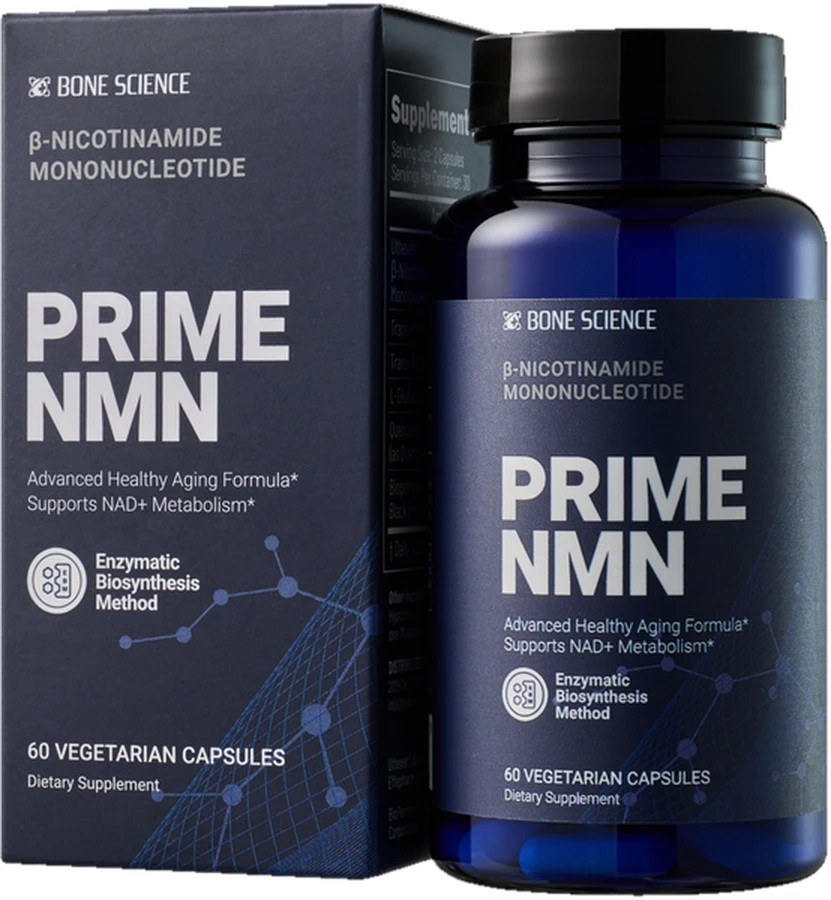
See Prime NMN
The studies above were not conducted on BoneScience products.
Related: Does NMN Work? What 12 Human Studies Actually Found · How Much NMN Per Day? The Doses Used in 20 Human Studies · NMN and NAD+: What 3 Human Trials Actually Found
Sources
- Pencina KM, et al. J Clin Endocrinol Metab. 2023;108(8):1968-1980. PubMed · doi
- Pencina KM, et al. J Gerontol A Biol Sci Med Sci. 2023;78(1):90-96. PubMed · doi
- Fukamizu Y, et al. Sci Rep. 2022;12(1):14442. PubMed · doi
- Liao B, et al. J Int Soc Sports Nutr. 2021;18(1):54. PubMed · doi
- Yang DL, et al. J Int Soc Sports Nutr. 2026;23(1):2632284. PubMed · doi
- Christen S, et al. Nat Metab. 2026;8(1):62-73. PubMed · doi
- Yi L, et al. Geroscience. 2023;45(1):29-43. PubMed · doi
- Huang H. Front Aging. 2022;3:851698. PubMed · doi
- Akasaka H, et al. Geriatr Gerontol Int. 2023;23(1):38-43. PubMed · doi
- Igarashi M, et al. NPJ Aging. 2022;8(1):5. PubMed · doi
- Kim M, et al. Nutrients. 2022;14(4):755. PubMed · doi
- Okabe K, et al. Front Nutr. 2022;9:868640. PubMed · doi
- Katayoshi T, et al. Sci Rep. 2023;13(1):2786. PubMed · doi
- Yamane T, et al. Clin Nutr ESPEN. 2023;56:83-86. PubMed · doi
- Morifuji M, et al. Geroscience. 2024;46(5):4671-4688. PubMed · doi
- Yoshino M, et al. Science. 2021;372(6547):1224-1229. PubMed · doi
- Yamaguchi S, et al. Endocr J. 2024;71(2):153-169. PubMed · doi
- Irie J, et al. Endocr J. 2020;67(2):153-160. PubMed · doi
- Zhao C, et al. Sci Rep. 2026;16(1):5408. PubMed · doi
- Wakabayashi J, et al. Sci Rep. 2026;16(1):27464. PubMed · doi
- Shiraki A, et al. Geriatr Gerontol Int. 2026;26(5):e70516. PubMed · doi
- Yang W, et al. Nutrients. 2026;18(14):2251. PubMed · doi
- EFSA Panel on Nutrition, Novel Foods and Food Allergens (NDA), et al. EFSA J. 2026;24(5):e10007. PubMed · doi
- Abe T, et al. Nutrients. 2026;18(21):3490. PubMed · doi
*These statements have not been evaluated by the Food and Drug Administration. This product is not intended to diagnose, treat, cure, or prevent any disease. This article is for general education and is not medical advice.