


NMN is everywhere right now: podcasts, longevity headlines, a friend's morning routine. So here is the question worth asking before you buy any of it: what happened when real people, not mice, actually took it? Three randomized trials give a clear first answer.
The cell's charger
Illustration of the direction of change, not exact values.
NAD+ (nicotinamide adenine dinucleotide) helps cells turn food into energy and supports enzymes involved in cellular maintenance. Because it declines with age in animal studies, scientists began testing precursors such as NMN in people.
What 3 human trials actually found
| Study | Who and how long | What was measured |
|---|---|---|
| Yi et al., GeroScience 2023 | 80 healthy middle-aged adults, 60 days, 300 / 600 / 900 mg a day vs placebo | Blood NAD+ rose in every NMN group; no safety issues were found. Walking distance in a 6-minute test was higher than placebo. |
| Igarashi et al., npj Aging 2022 | Healthy older men, 250 mg a day for 6 or 12 weeks | Blood NAD+ and related metabolites rose; well tolerated. Muscle findings were preliminary. |
| Yoshino et al., Science 2021 | Postmenopausal women with prediabetes and overweight or obesity, 250 mg a day for 10 weeks | Changes in muscle insulin signaling in a research setting. |
And what they didn't find
These were small trials in specific groups of people, lasting 6 to 12 weeks. They did not test whether NMN changes how long people live, and some outcomes were preliminary. Some trials were funded by NMN manufacturers, which the authors disclose. In short: the "does it raise NAD+?" question has a consistent early answer; the bigger questions are still being studied. These are research findings, not claims about any single product.
How to choose a quality NMN
Because NMN is a newer ingredient, quality varies widely between brands. Three things are worth checking:
- A named ingredient. Look for a specific, traceable NMN raw material rather than an unnamed powder.
- Independent testing. A third-party program that buys and tests the product checks whether the label matches what is inside.
- A clear daily amount. The label should state exactly how much NMN is in each serving.
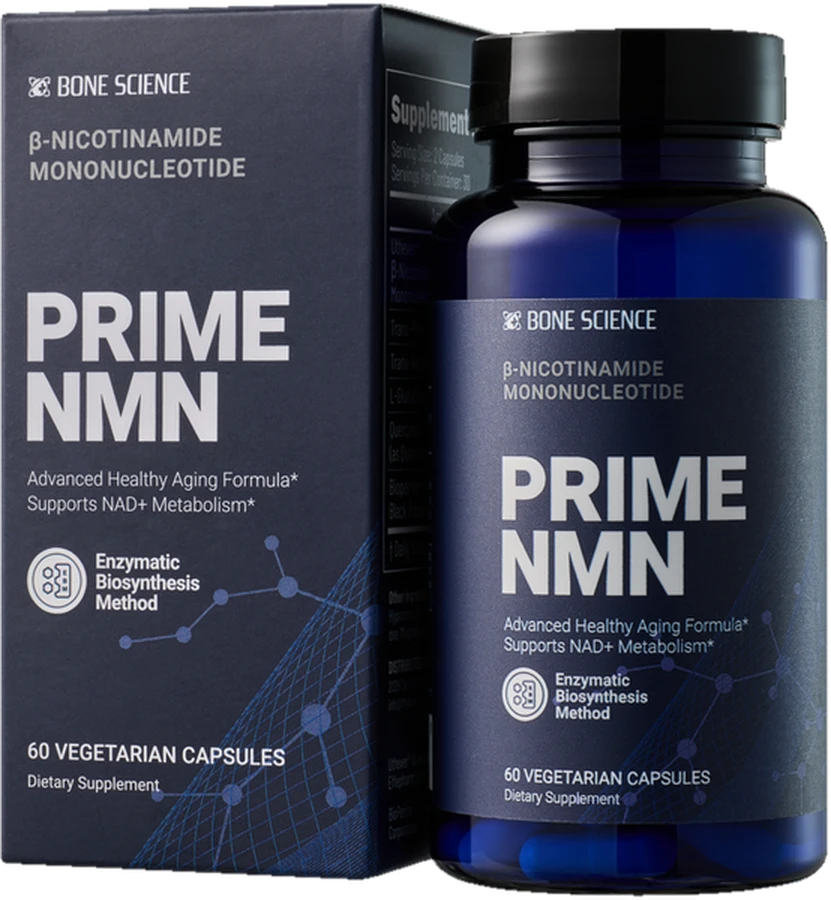
See Prime NMN
Questions readers ask
- How long did the studies last?
- Between 6 and 12 weeks in the trials above.
- Is NMN the same as NAD+?
- No. NMN is a precursor; the body converts it into NAD+.
- Should I ask my doctor first?
- Yes, especially if you take prescription medication or have a health condition.
Next in Healthy Aging Science: Our research log · Bone health tips for older adults
- Yi L, et al. The efficacy and safety of β-nicotinamide mononucleotide (NMN) supplementation in healthy middle-aged adults. GeroScience. 2023;45(1):29-43. doi:10.1007/s11357-022-00705-1
- Igarashi M, et al. Chronic nicotinamide mononucleotide supplementation elevates blood NAD+ levels and alters muscle function in healthy older men. npj Aging. 2022;8:5. doi:10.1038/s41514-022-00084-z
- Yoshino M, et al. Nicotinamide mononucleotide increases muscle insulin sensitivity in prediabetic women. Science. 2021;372:1224-1229. doi:10.1126/science.abe9985
*These statements have not been evaluated by the Food and Drug Administration. This product is not intended to diagnose, treat, cure, or prevent any disease. This article is for general education and is not medical advice.